Omron Innovation Lab — Engineering Tomorrow's Connectivity

Where AI meets fiber optics. Where digital twins replace guesswork. Where 185 patents are just the beginning.

Request an Innovation Briefing

Four Research Pillars Driving the Industry Forward

14% of annual revenue invested in R&D. 110 engineers. Zero compromise on what's next.

AI-Powered Connector Intelligence
Research Track 1

AI-Powered Connector Intelligence

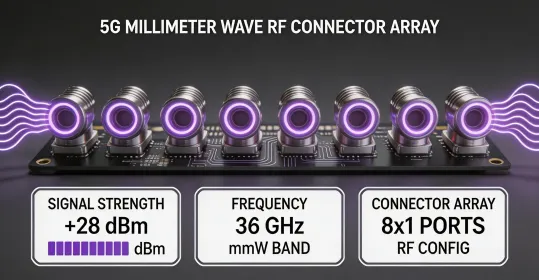
Embedding edge AI processors directly into connector housings to enable real-time insertion loss monitoring, predictive failure analysis, and autonomous performance optimization. Our latest results show 94.7% prediction accuracy 72 hours before failure events.
94.7% Prediction Accuracy
72h Early Warning Window
42 Patents Filed
5G/6G mmWave Connectors
Research Track 2

5G/6G mmWave Connector Design

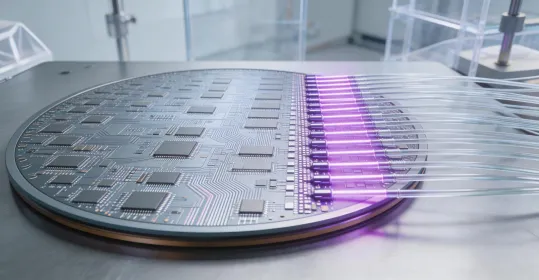
Pushing RF connector performance beyond 40 GHz for millimeter wave and sub-THz applications. Our proprietary micro-machining process achieves surface roughness below 0.2 μm, achieving VSWR ≤ 1.15:1 at 39 GHz in production units.
≤ 1.15:1 VSWR at 39 GHz
0.2 μm Surface Roughness
28 Patents Filed
Silicon Photonics Integration
Research Track 3

Silicon Photonics Co-Packaged Optics

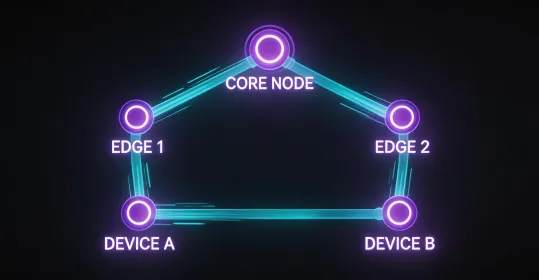
Developing next-generation connector interfaces for co-packaged optics (CPO) that bridge photonic integrated circuits directly to fiber networks. Targeting 1.6 Tbps per connector by 2027.
1.6 Tbps Target Bandwidth
3 Foundry Partners
2027 Target Launch
Digital Twin Platform
Research Track 4

Digital Twin Network Simulation

Our proprietary platform creates connector-level digital twins that simulate thermal, mechanical, and optical behavior under real-world network conditions. Adopted by 50+ enterprise customers to reduce deployment errors by 60%.

60% Fewer Deployment Errors
50+ Enterprise Customers
15 Patents Filed

185 Patents and Counting

Our intellectual property portfolio spans four continents and covers innovations in smart sensing, precision micro-machining, optical coupling, and AI-driven network management.

Smart Connector Sensing
42
RF/mmWave Design
28
Fiber Optic Coupling
55
Manufacturing Process
35
Digital Twin / Software
25
Omron Patent Portfolio

Honest Perspectives: Technology Selection Trade-offs

No single technology solves every problem. We believe informed customers make better partners. Here are two active debates shaping our industry.

5G mmWave vs. Sub-6 GHz Deployment

Our mmWave connectors deliver massive bandwidth (up to 800 MHz channels) and ultra-low latency for industrial IoT and high-density venues. However, mmWave requires significantly higher infrastructure density due to limited propagation range (typically 200-500 meters line-of-sight). Sub-6 GHz bands offer superior coverage and building penetration at lower deployment cost — making them more practical for nationwide rollout and rural connectivity.

Our recommendation: For factory floors and dense campus environments, mmWave delivers measurable ROI. For wide-area coverage, sub-6 GHz remains more cost-effective per square kilometer. Many of our customers deploy both in a complementary architecture.

Active Optical Networks vs. Passive Optical Networks

Active Optical Networks (AON) provide dedicated bandwidth per user and reach up to 80 km, making troubleshooting straightforward. Passive Optical Networks (PON) eliminate powered field equipment, reducing operational costs and simplifying outside plant design — but share bandwidth among users and limit reach to approximately 20 km.

Our recommendation: For enterprise and data center interconnects requiring guaranteed bandwidth, AON is preferred. For high-density residential and FTTH deployments where cost-per-subscriber matters most, GPON or XGS-PON offers better economics. Our connector portfolio supports both architectures.

Academic & Industry Partnerships

Collaborating with 8 universities and research institutions across Japan, Germany, and the United States to advance fundamental research in photonics, materials science, and network intelligence.

University Research Programs

Active joint research programs with 8 universities in Japan (Osaka University, Tokyo Institute of Technology), Germany (RWTH Aachen, Fraunhofer IZM), and the United States (MIT, Stanford, Georgia Tech, University of Arizona) focused on silicon photonics and advanced materials.

8 Active Programs

Standards Body Participation

Contributing member of IEC TC86, IEEE 802.3, and OIF working groups. Our engineers help define the connector standards the industry follows.

5 Working Groups

Open Innovation Program

Our Open Innovation portal invites startups and researchers to propose joint projects. 12 collaborations launched in the past 3 years.

12 Collaborations

Have an Idea That Could Change the Game?

We co-create with customers, researchers, and startups. Propose a collaboration or request an innovation briefing.